Mercer Gasket & Shim delivers precision-engineered sealing solutions for fittings, whether you need a single emergency replacement for Maintenance, Repair, and Operations (MRO) or high-volume production for Original Equipment Manufacturers (OEMs). Backed by decades of experience serving diverse industries where leak-free connections are paramount, we have the expertise and advanced manufacturing capabilities to meet your exact specifications for fitting seals and gaskets.
Ready to discuss your fitting sealing requirement? Contact us today! Keep reading to learn more about the industries we serve and the connection solutions we provide, or send an RFQ or call (800) 210-5000 to speak with a sealing expert.
Industries Served
Fittings are the essential junctions of any fluid system, and their seals are critical for maintaining system pressure and preventing hazardous leaks at every connection point.
Oil and Gas: Fittings, including flanges, couplings, and adapters—are under immense stress in upstream and downstream operations. High-pressure seals are critical for preventing leaks in volatile environments, ensuring safety and environmental compliance during high-pressure transport.
Chemical Processing: In systems handling aggressive reagents and high-purity chemicals, fitting seals must be inert. Robust gaskets and O-rings prevent external leaks that could lead to hazardous exposure or process contamination, maintaining system integrity.
Water and Wastewater Treatment: Large-scale piping relies on mechanical joints and flanged fittings to manage flow. Durable, corrosion-resistant seals prevent water loss and soil infiltration, ensuring the efficiency and sanitation of municipal infrastructure.
Power Generation: High-pressure steam lines require fittings that can handle extreme thermal expansion. Specialized gaskets are essential for withstanding thermal cycling, preventing steam loss, and maintaining the energy efficiency of the plant.
HVAC and Refrigeration: Precise fittings regulate the closed-loop flow of refrigerants. Dependable seals prevent the escape of expensive or environmentally harmful gases, ensuring the energy efficiency and longevity of climate control systems.
Food and Beverage: Sanitary tri-clamp and threaded fittings are used to join stainless steel process lines. Hygienic seals are paramount for eliminating “dead spaces” where bacteria could grow, meeting stringent FDA and 3A sanitation regulations.
Pulp and Paper: Fittings manage abrasive slurries and caustic liquors. Resilient seals are necessary to withstand erosion and chemical attack, ensuring operational continuity in harsh, high-vibration environments.
Marine: Pipe and tube fittings on vessels must resist saltwater corrosion. Seals in this environment must maintain a tight grip despite constant shipboard vibration and structural movement.
Manufacturing: Hydraulic and pneumatic fittings power automated machinery. Effective seals prevent pressure drops that could lead to system downtime, equipment inaccuracy, and wasted energy.
Core Categories of Fitting Solutions
Fitting Type
Mechanism
Best For…
Compression
Uses a ferrule to grip the tube when a nut is tightened.
Gas and liquid lines where a leak-tight seal is critical.
Threaded
Uses NPT, BSPP, or Metric threads to join components.
General piping, low-to-medium pressure industrial use.
Push-to-Connect
Uses a collet and O-ring for instant, tool-free connection.
Pneumatic systems and quick-assembly prototypes.
Flared
Uses a 37° or 45° flared tube end held by a nut/sleeve.
High-pressure hydraulic and fuel systems.
Flanged
Uses bolted rims with a gasket compressed between faces.
Large diameter piping and high-pressure industrial mains.
Commonly Used Sealing Solutions for Fittings
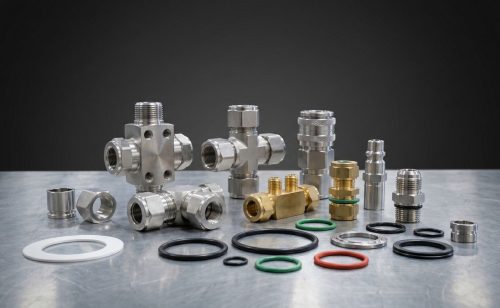
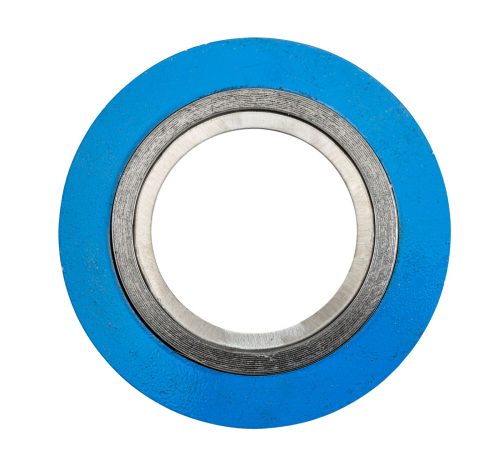
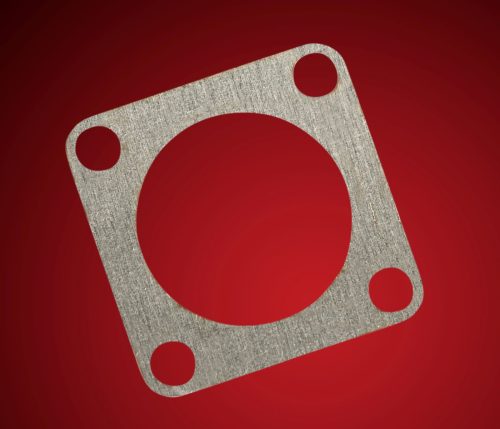
Flange Gaskets (Ring and Full Face)
Why: Gaskets are used to seal the flat mating surfaces of flanged fittings. They provide a static seal that compensates for surface irregularities on the flange face. Materials range from elastomeric rubber for water service to spiral wound metallic gaskets for high-pressure steam.
Where: Found in heavy industrial piping, pumping stations, and large-scale processing plants. They are a core requirement for MRO shutdowns and OEM skid fabrication.
O-Rings and Face Seals
Why: Many modern fittings, such as SAE Straight Thread or ORFS (O-Ring Face Seal), rely on an elastomer to do the sealing rather than the metal threads. This provides a superior leak-tight joint that is highly resistant to “weeping” under high pressure.
Where: Common in hydraulic systems, fuel injection lines, and precision pneumatic controls. These are high-volume staples for OEM assembly lines.
Thread Sealants and Tapes
Why: In tapered threaded fittings (like NPT), the seal is created by the metal-to-metal contact of the threads. Sealants fill the microscopic gaps in the thread crests and roots to prevent helical leakage and prevent galling.
Where: Used in plumbing, low-pressure gas lines, and general industrial maintenance.
Factors Influencing Fitting Sealing Selection
The choice of a sealing solution for a fitting application is highly dependent on the mechanical stresses and the media involved:
System Pressure and Surges: Fittings must be rated for the maximum working pressure. High-pressure systems often require metallic or reinforced seals to prevent blowout.
Vibration and Movement: In mobile equipment or marine use, fittings are subject to constant vibration. Solutions like bite-type fittings or specialized locking seals are used to prevent the connection from loosening over time.
Media Compatibility: The seal material must be chemically compatible with the fluid. A mismatch can lead to seal swelling, degradation, or catastrophic failure, especially in chemical processing applications.
Temperature Extremes: High heat can soften elastomers, while extreme cold can make them brittle. We evaluate the thermal operating envelope to select materials that maintain elasticity and seal force.
Installation Repeatability: For MRO applications where fittings are frequently disconnected for maintenance, we prioritize designs that allow for multiple remakes without compromising the seal.
Mercer’s experienced team considers all of the above to provide expert guidance in fitting sealing solution selection. We ensure your connections remain secure, protecting your operational efficiency and safety. Whether for high-volume OEM production or critical MRO replacements, we are committed to finding the perfect fit. Contact the Mercer team today!
Mercer Gasket & Shim delivers precision-engineered solutions, whether you need an emergency replacement for MRO or high-volume production for OEMs. Backed by decades of experience serving diverse industries where reliable fluid transfer is paramount, we have the expertise and advanced manufacturing capabilities to meet your exact specifications for pump sealing. Ready to discuss your sealing requirement, Contact us today! Keep reading to learn more about the industries we serve and the sealing solutions we provide or contact us and speak with a sealing expert.
Industries Served:
Oil and Gas: Pumps are essential in all stages of oil and gas production, and reliable sealing solutions are critical for preventing leaks of crude oil, natural gas, and refined oil products in drilling, extraction, transportation (pipelines), refining, and petrochemical processing.
Chemical Processing: Sealing solutions for pumps are vital for safely transferring a wide range of corrosive, abrasive, and high-temperature chemicals in the production of fertilizers, pharmaceuticals, plastics, and other chemical products, preventing spills and ensuring process integrity.
Water and Wastewater Treatment: Pumps utilize various sealing components for moving raw water, treated water, sewage, and sludge, ensuring leak-free operation throughout treatment processes, safeguarding water quality and preventing environmental contamination.
Power Generation: Pumps rely on robust sealing solutions for circulating water in cooling systems, boiler feedwater, condensate return, and fuel transfer in fossil fuel, nuclear, and renewable energy power plants, preventing costly downtime and maintaining efficiency.
HVAC and Refrigeration: Large-scale heating, ventilation, and air conditioning (HVAC) systems and industrial refrigeration depend on effective pump seals to circulate refrigerants, chilled water, and hot water, ensuring efficient thermal transfer and preventing energy loss.
Food and Beverage: Hygienic sealing solutions for pumps are essential for transferring liquids like milk, juices, sauces, and spirits, as well as for processes like cleaning-in-place (CIP) and sterilization in food and beverage production, ensuring product purity and preventing contamination.
Pulp and Paper: Pump seals are crucial for moving abrasive pulp slurry, corrosive chemicals, and water throughout various stages of paper manufacturing, including pulping, bleaching, and papermaking, ensuring operational continuity and preventing leaks.
Marine: Ship engines and other marine systems extensively use pumps, and durable sealing solutions are vital for ballast water transfer, engine cooling, fuel transfer, firefighting, and general service applications, enduring harsh marine environments.
Manufacturing: Many manufacturing processes, such as metal finishing, textile production, and general assembly, rely on pumps for fluid circulation, cooling, and waste removal, with effective sealing preventing leaks that could damage equipment or product.
Commonly Used Sealing Solutions for Pumps:
Mechanical Seals:
Why: Provide a highly effective and long-lasting seal, designed to prevent leakage of process fluid along the pump shaft. They consist of a rotating and a stationary face, often made of durable materials like silicon carbide or tungsten carbide, suitable for high-pressure and high-temperature applications.
Where: Widely used across industries for critical applications where minimal leakage is paramount, such as chemical processing, oil and gas, pharmaceuticals, and power generation. Both MRO and OEM benefit from their reliability.
Gaskets (Static Seals):
Why: Essential for sealing stationary connections within pump systems, such as between pump casing halves, flanges, and access covers. They prevent fluid leakage by filling irregularities between mating surfaces. Materials vary widely, from compressed fiber to PTFE and rubber, chosen based on fluid compatibility, temperature, and pressure.
Where: Ubiquitous in all pump applications for static sealing points. Critical for MRO in replacements during pump overhauls and for OEMs in initial pump assembly to ensure leak-free operation.
Packing (Compression Packing):
Why: A traditional sealing method, consisting of braided or molded material (e.g., graphite, PTFE, aramid fibers) compressed around the pump shaft to create a seal. It’s often used where some controlled leakage is acceptable or for older pump designs.
Where: Still commonly found in older pump installations in water and wastewater, pulp and paper, and some general industrial applications for MRO. Less common in new OEM designs prioritizing lower leakage and longer service life.
O-Rings:
Why: Simple, cost-effective, and highly versatile seals, typically made from elastomeric materials like Viton, EPDM, or Buna-N, Silicone and others. They provide an effective seal in dynamic (reciprocating or rotating) and static applications under moderate pressure and temperature, by being compressed in a groove.
Where: Used extensively in smaller pump components, valves, and manifold connections, both for OEM assembly and MRO repairs across almost all industries due to their adaptability and wide material compatibility.
Lip Seals (Oil Seals):
Why: Primarily designed to exclude dirt, dust, and moisture while retaining lubricant in rotating shaft applications, typically at lower pressures. They consist of a flexible lip that rides on the shaft, creating a seal.
Where: Commonly used in industrial gear pumps, hydraulic pumps, and other applications where lubricant retention and exclusion of contaminants are key, serving both OEM initial builds and MRO replacement needs.
The choice of sealing solution for a pump depends on several critical factors, including:
Fluid Characteristics: The type of fluid (viscosity, abrasiveness, corrosivity, temperature, presence of solids) dictates the required material compatibility and seal design.
Operating Conditions: Pressure, temperature, and shaft speed are crucial for determining the robustness and type of seal needed. High pressures and temperatures often necessitate mechanical seals.
Pump Type and Design: The specific pump design (centrifugal, positive displacement, submersible) and its configuration influence the available sealing options.
Leakage Tolerance: Applications where any leakage is unacceptable (e.g., hazardous chemicals, clean processes) will require highly effective sealing solutions like mechanical seals.
Maintenance Requirements and Lifespan: The desired service life of the seal and the ease of maintenance are important considerations for both MRO and OEM decisions.
Mercer’s experienced team considers all of the above to provide expert guidance in pump sealing solution selection. We carefully consider critical factors to ensure your fluid transfer systems operate with optimal safety, efficiency, and environmental compliance. We’re committed to helping you find the perfect sealing solution for your specific industry and pump application, whether for MRO or OEM needs. Contact the Mercer team today!
Many companies like to tell you they are experts in their field. Unfortunately, they also ask you to trust them without further proof. Their websites and their solutions to your needs are cut-and-paste. At Mercer Gasket, we believe that providing information for our customers is the best way to educate and provide additional services.
That is why we support you with reference materials available on a wide range of topics. This extra information allows us to share our over 80 years of experience in handling the materials that make quality gaskets and shims.
One perfect example of our commitment to keeping you informed is our collection of free Chemical Resistance Charts. Downloadable from our website, these charts provide a list of the chemical resistance for various metallic and elastomer materials we work with at Mercer Gasket. These in-depth charts deal with a variety of factors that influence the overall rate of corrosion in metals and elastomers such as:
Metals
Concentration
Temperature
Degree of agitation
Presence of Impurities
Elastomers
Service temperature
Service conditions
Grade of the polymer
Nature of the compound
Durometer or hardness of compound
Utilizing this information is critical when it comes to choosing the right material for your custom gasket or shim. Mercer Gasket understands that one-size does not fit all. Every one of our customer’s needs are unique, which is why we use information like our chemical resistance charts to tailor our services to meet your exacting requirements. We take pride in getting things right the first time.
If you want to learn more about Mercer’s chemical resistance charts simply click the button below and you’ll be able to download your free copy today.


 Food and Beverage:
 Why: Simple, cost-effective, and highly versatile seals, typically made from elastomeric materials like Viton, EPDM, or Buna-N
 Fluid Characteristics: